

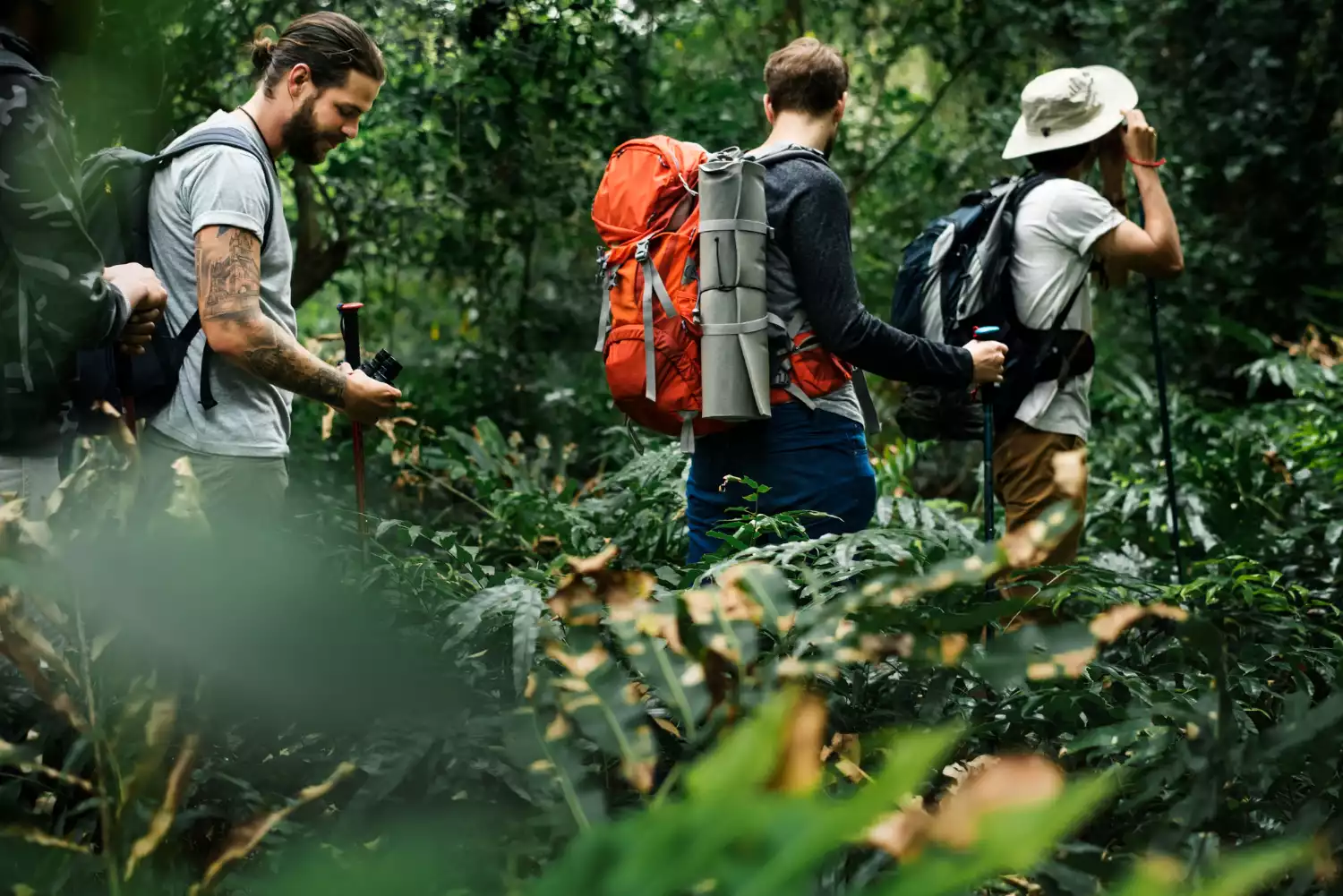
Most trekking packing lists online look the same because they copy each other. They list everything but don't tell you what you can leave out and what you can't, which is exactly what you need to know when you're standing in front of a pack you'll be carrying for eight hours.
This list is sorted by priority and includes a section most lists skip.
The rule: every item has to answer one question
“What happens if I don't have this?”
- No headlamp when it gets dark in the forest → genuinely dangerous
- No folding chair → a bit inconvenient, you can sit on the ground
This question eliminates about a third of what beginners usually pack.
For a 2-day, 1-night trip, a sensible pack usually weighs 8–12kg including water. Above 12kg the trip starts to hurt, and you'll feel it clearly on the second climb.
Group 1: Safety (nothing here can be left out)
This is the only group with no room for cuts.
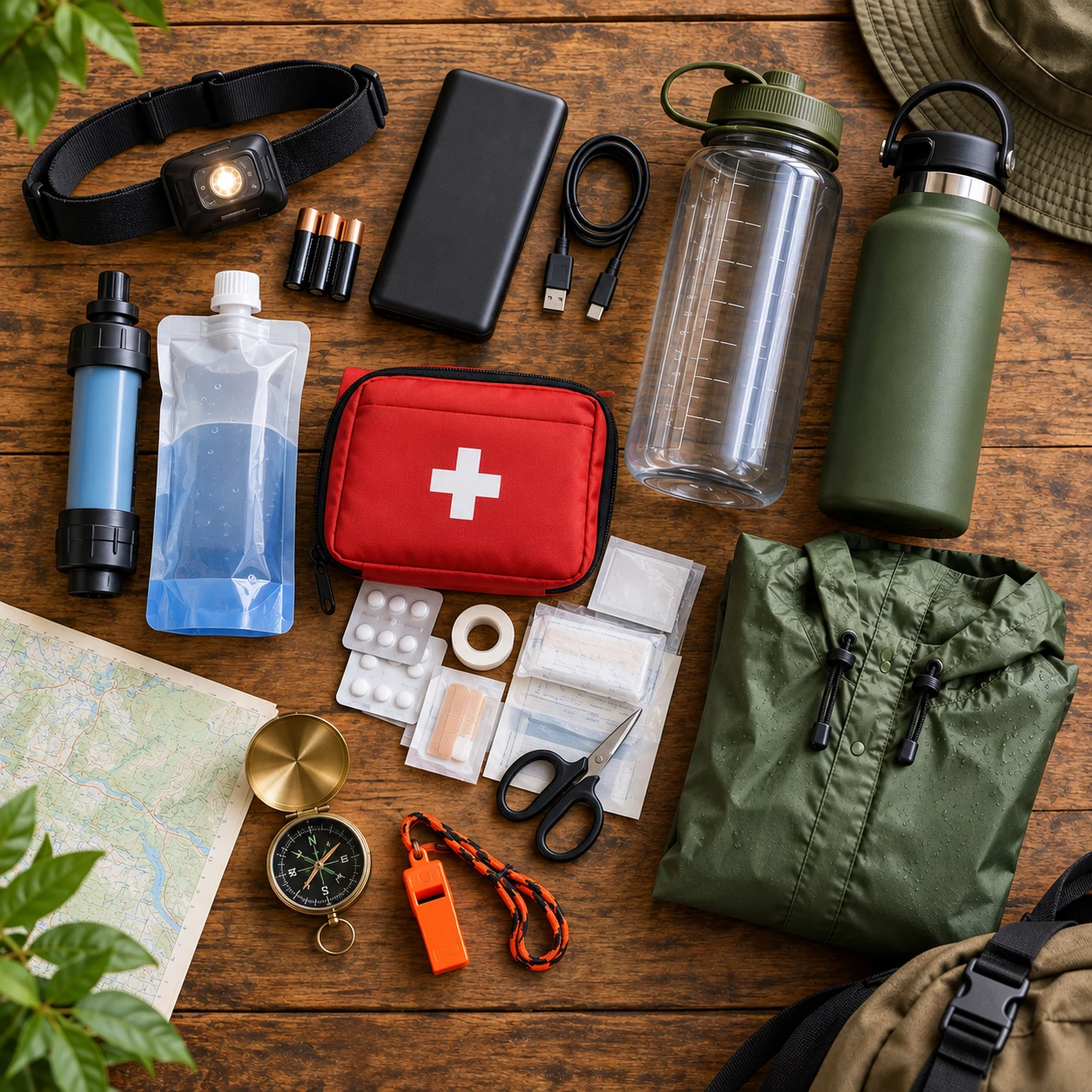
| Item | Why |
|---|---|
| Headlamp | It gets dark much faster in the forest than in the open. A headlamp keeps both hands free |
| Spare batteries | For your light and phone |
| Enough water | At least 2 liters per day, more in hot weather |
| Water purification tablets or filter bottle | To collect water along the way instead of carrying it all from the start |
| First aid kit | Bandages, antiseptic, personal medication |
| Rain jacket or poncho | Even in the dry season |
| Whistle | Light and takes almost no space, but can save your life if you get lost |
Fully charged phone with offline maps downloaded. There's usually no signal in the forest, but GPS still works.
Group 2: Shoes and clothing
This group decides whether the trip is fun or miserable more than anything else.
Trekking shoes with good grip, already broken in. Never wear brand-new shoes on a long trip; it's a guaranteed recipe for blisters.
Moisture-wicking socks, plus at least one spare pair. No cotton. Cotton holds water and is the number one cause of blisters. Changing socks midday after stream crossings is one of the best things you can do for your feet.
Quick-dry long trousers and long-sleeved shirt. They protect against sun and insects and reduce scratches when pushing through bushes.
A dry set for the night. Keep it in a waterproof bag. Wear it only to sleep, then change back into the damp set in the morning. It sounds unpleasant, but it's how experienced hikers always keep one dry set.
A light jacket. The temperature difference between summit and valley can be large, and nights up high are usually colder than you expect.
Hat and trekking poles. Poles help most on descents, where your knees take a heavy load.
Group 3: Sleeping and eating
On a tour, most of this group is provided by the organizer. Ask in advance so you don't double up.
- Tent or hammock, depending on terrain
- Sleeping bag suited to night temperatures
- Insulated sleeping pad: more important than the sleeping bag because it blocks the cold from the ground
- High-energy snacks: nuts, chocolate, energy bars
- Light personal mess kit
- Bag to carry your trash out
Group 4: Personal hygiene (the part most lists skip)
This is where other lists just say “toiletries” and leave it at that. But two days in the forest without a shower is normal, and how you handle it decides how comfortable the whole trip is.
The real problem isn't “dirt”, it's moisture. In tropical forest, humidity is close to saturation and sweat doesn't evaporate. Skin that stays enclosed and damp for hours easily gets irritated and itchy. The top priority is staying dry, not carrying lots of wash.
Individually wrapped wet wipes. A quick wipe at the end of the day, no water needed. Individual wrapping matters more than you'd think: once a big pack is opened, the rest dry out in your backpack. For women, individually wrapped feminine wipes are much handier because you don't need privacy for long.
Multi-purpose biodegradable soap. One bottle replaces three: hands, dishes, hair and laundry. Biodegradable matters when you're near streams, because regular soap harms water sources.
Rule near water sources: even with biodegradable soap, wash at least 60 meters from the stream and pour wastewater on the ground, never straight into the stream.
Anti-chafe stick. Apply to inner thighs, heels, ankles and where pack straps press, before you set off, not when it starts to sting. By then the skin is already damaged. A roll-on stick is handier than a cream outdoors because your hands don't get sticky.
Toilet paper and a bag for used paper. Carry it out, don't bury it. Paper breaks down very slowly in damp forest.
Small trowel for digging. Go at least 60 meters from water, trails and campsites, dig 15–20cm deep and fill it in.
Microfiber towel. Light, quick-drying, takes very little space.
Group 5: Insect protection
In Vietnam's forests in the rainy season, this group is essential, not optional.
One DEET leech repellent is enough for both leeches and mosquitoes : no need to bring two. Choose by trip length:
- 2 days, 1 night: Repel 40 (40% DEET) is enough and can be shared by the group
- Traveling light, counting every gram: a 30ml Repel 100 fits in a trouser pocket
- Carrying lots of electronics: consider Sawyer Picaridin for the upper body, since DEET damages plastics and screens
Leech gaiters if the route has lots of leeches. They're the most effective physical measure and cost nothing per trip.
Tip: spray your shoes and socks the night before and let them dry naturally. The protective layer lasts longer on fabric than on skin.
Things people overpack
This is the part that takes a few kilograms off your pack.
Too many clothes. Two days don't need four outfits. The set you're wearing, a dry set for sleeping, plus spare underwear and socks is enough.
Large bottles of wash. Bottles of 300ml or more are heavy and never get used up. Decant into a small bottle, or leave the big one in the car.
Canned food and heavy food. For the same calories, nuts and energy bars weigh far less.
Folding chairs, inflatable pillows, string lights. Fun, but they're why your pack ends up at 15kg.
Books, big Bluetooth speakers. You'll be too tired to use them.
Oversized power bank. A 20,000mAh one weighs almost half a kilo. For 2 days, 10,000mAh is more than enough.
Differences between the rainy and dry seasons
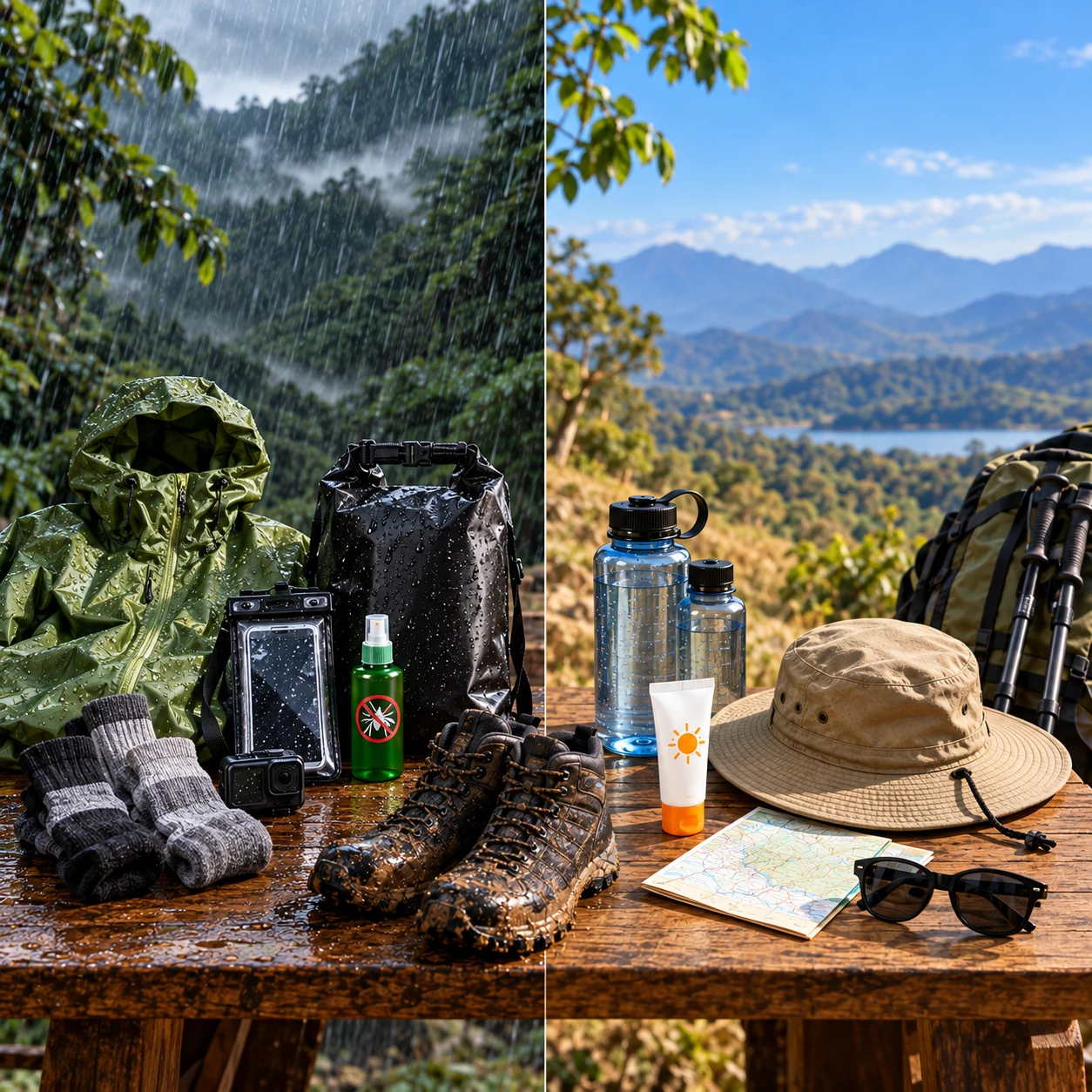
Rainy season add: a good rain jacket, a waterproof bag for electronics, extra socks, more thorough leech protection, and shoes with good grip for slippery trails.
Dry season add: more water, a wide-brimmed hat, sunscreen, and note that many streams may be dry, so don't count on collecting water along the way.
👉 Not sure which to choose? See the quick comparison in Leech repellents explained.
Frequently asked questions
What size backpack do I need for 2 days, 1 night?
Usually 30–45 liters. If you're on a tour with porters carrying shared gear, a smaller pack is fine.
How much water should I bring?
At least 2 liters per day. If the route has streams and you have purification tablets, carry less and refill along the way; it's much lighter.
Do I need proper trekking shoes?
Not necessarily, but your shoes must have good grip and be broken in. New shoes are the most common cause of blisters.
Is it a problem not to shower for 2 days in the forest?
Not for most people. Staying dry and changing your underwear and socks matter more than showering.
What do I need to bring on a tour?
Ask the organizer about tents, sleeping bags and food. Safety, clothing, personal hygiene and insect protection are always your responsibility.
Related:


