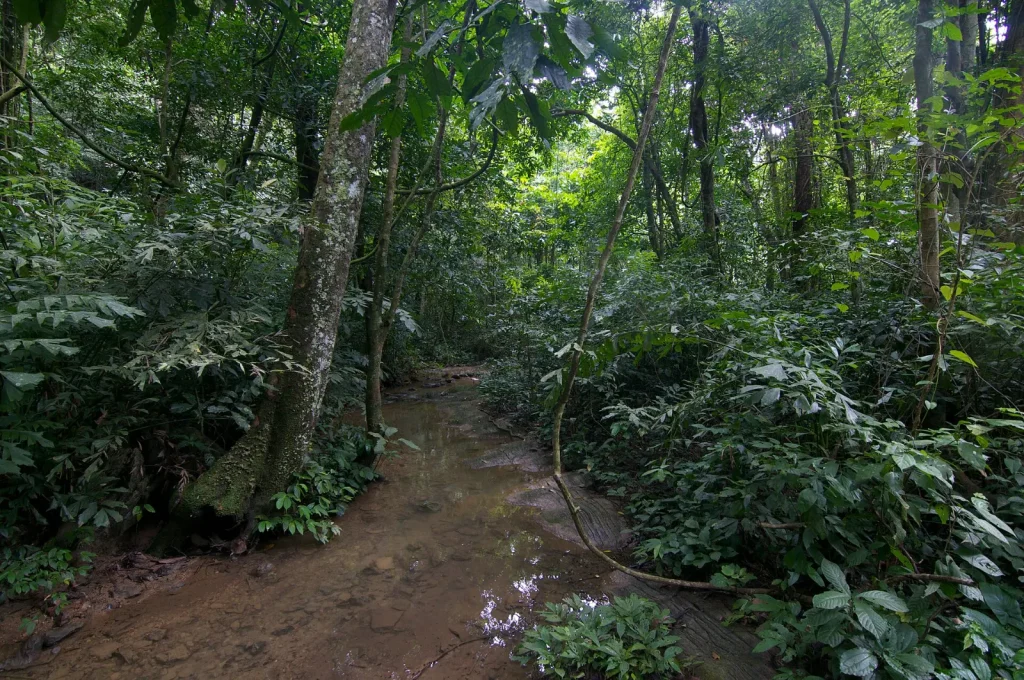


The short answer: yes, but the leeches are in the forest, not in the villages.
Pu Luong has two faces. Most visitors stay among the rice terraces and villages and hardly ever see a leech. For anyone heading deep into the primary forest, climbing the peak or trail running, it's a different story, especially in the rainy season.
The irony: the two best seasons for the rice terraces fall right in the peak leech season.
What Pu Luong is like
Pu Luong Nature Reserve lies in the northwest of Thanh Hoa province, across Ba Thuoc and Quan Hoa districts, about 170km from Hanoi. Its name means “the village's highest peak” in the Thai language.
The reserve covers about 17,662 hectares, roughly three quarters of it primary forest. It is the largest lowland limestone forest in northern Vietnam, with a highest peak of about 1,700m.

Those three things (primary forest, moisture-holding limestone, mostly low altitude) are exactly the habitat leeches love. Just like Cuc Phuong, not far away.
Leeches in Pu Luong by season
| Time of year | Leech level | Notes |
|---|---|---|
| May – June | Starting to increase | Flooded-field season, green paddies. Rains begin |
| July – September | Most | Peak rainy season, slippery trails |
| September – October | Still quite a few | Golden rice season, damp after the rains |
| November – April | Few | Dry and cold. Some years the peak gets very cold |
If you're going to Pu Luong for the golden rice or the flooded fields, the two most popular reasons, prepare for leeches as you would for a real rainy-season forest trip. If comfortable trekking is your priority, local sources all recommend October to April.
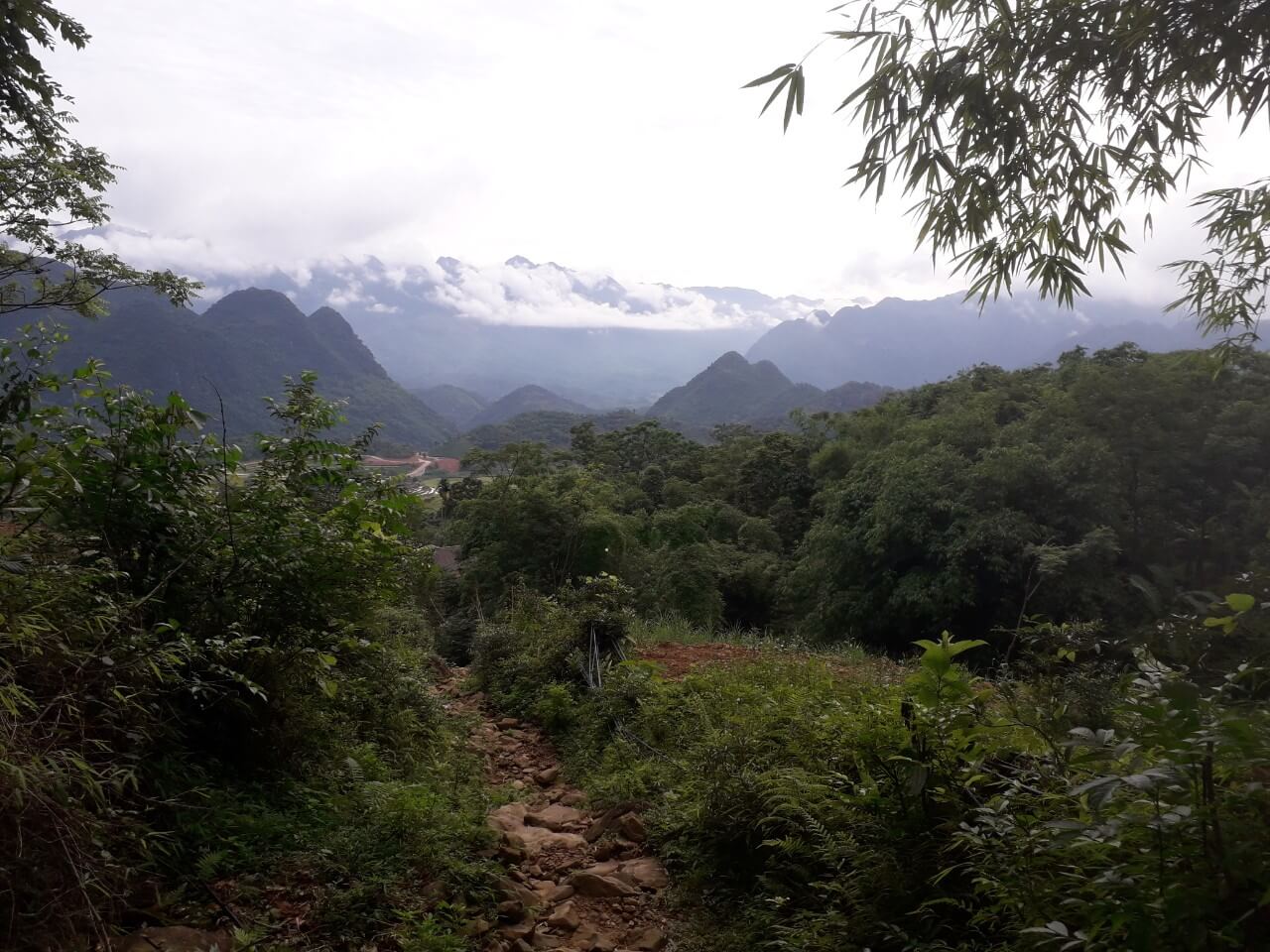
Which routes have leeches and which don't
| Route | Terrain | Leech level |
|---|---|---|
| Don – Ngon – Leo villages | Rice terraces, villages | Few |
| Paths around the homestays, Cham stream | Footpaths, along streams | Few, except right by the stream |
| Bam village | Forest trails | Many in the rainy season |
| Son – Ba – Muoi | Mountain trails with forest sections | Moderate to many |
| Pu Luong summit climb | Primary forest | Most |
A simple rule: the further you leave the paddies for closed forest canopy, the more leeches. From the villages up to the summit, the fields shrink and give way to dense forest, exactly where leeches gather.
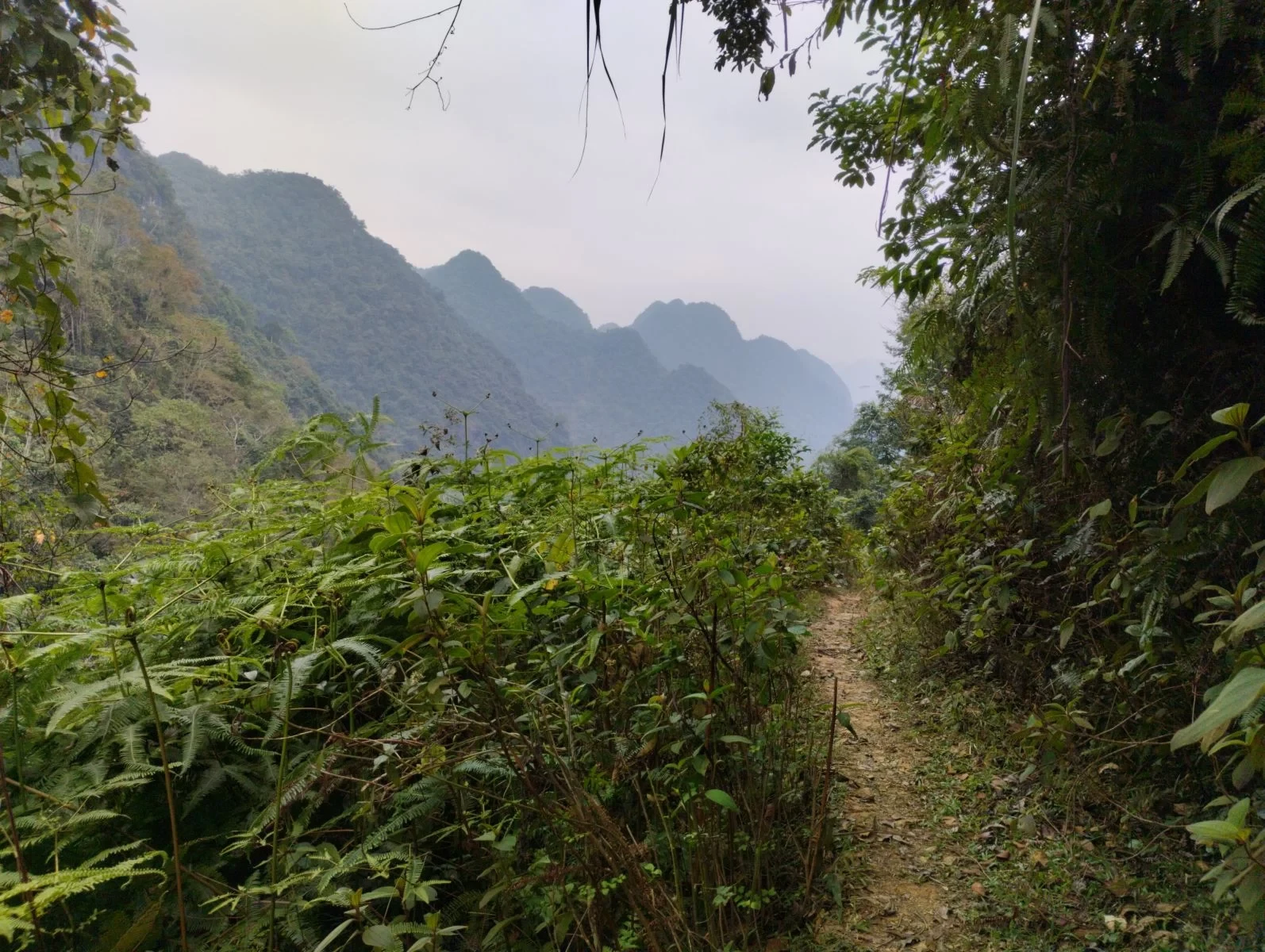
For trail runners in Pu Luong
Pu Luong hosts trail races, with many routes through primary forest. Runners face a higher risk than hikers for three reasons:
- High body heat, heavy breathing, lots of sweat : all three are signals leeches detect from a distance.
- No stops to check. Hikers check their legs every 30 minutes; runners often only notice at the finish.
- Long distances cross several forest types. A 50km course can cover both dry fields and damp forest.
Keep it simple: spray shoes, socks and trouser hems before the start. Also carry a 30ml Repel 100 that fits in your running vest pocket, to reapply after stream crossings.
👉 See also: How to prevent leeches when trail running
Preparing for a trek
Tuck your trousers into your socks. It's the most effective free measure, because leeches crawl up from the ground.
Spray in this order: shoes → socks → trouser hems → ankles. Also spray your arms and collar if you'll be pushing through vegetation.
Reapply after every stream crossing. Pu Luong has many streams, and water washes off the protective layer.
Stopping to check your legs every 30–45 minutes when walking in the forest.
Choose the strength for your trip:
- Day walks through villages and fields: Repel 40 (40% DEET) is enough and can be shared by the whole group
- Summit climbs, long hours in the forest: Repel 100 (98% DEET) gives longer protection. Adults 18+ only
- With children: BugX 30 (30% DEET)
A higher concentration isn't stronger, it's longer-lasting.
Mosquitoes at the homestay
Most visitors stay in stilt-house homestays by the rice fields. Leeches don't come up here, but mosquitoes do, especially in the evening when you sit on the veranda. One spray with DEET or Picaridin works for both, so you don't need to bring two.
If a leech bites
- Remove it with a fingernail : slide it sideways into the small end (the mouth). Don't pull hard.
- Wash with soap and press to stop the bleeding.
- Disinfect and cover it. Oozing blood for a few hours is normal.
Don't use salt, fire, medicated oil or alcohol to remove it : the leech will regurgitate into the wound.
👉 Not sure which to choose? See the quick comparison in Leech repellents explained.
Frequently asked questions
Are there many leeches in Pu Luong?
Yes on the forest routes, especially from July to September. Few in the rice terraces and villages.
Will I meet leeches in Pu Luong during the golden rice season?
Possibly, if you go into the forest. September and October are still damp after the rainy season.
What do I need to climb Pu Luong peak?
Shoes with good grip, high socks, a DEET leech repellent, a warm layer because the summit is cold, and ideally a local guide.
When are there fewest leeches in Pu Luong?
November to April, when it's dry and cold.
Related: